To have healthy gums, dental plaque and calculus/tartar should be removed regularly.
Plaque is a sticky, almost invisible film that forms on the teeth. It is a growing colony of living bacteria, food debris, and saliva. The bacteria produce toxins (poisons) that inflame the gums. Calculus/tartar is a hardened plaque that has been left on the tooth for some time and is now firmly attached to the tooth surface. Calculus may form above and below the gum line and can only be removed with special dental instruments. If left, calculus can worsen the inflammation and cause swelling and bleeding of the gums.
It is important to get your teeth cleaned by a professional on a regular basis to prevent more serious gum and health conditions. We have a range of dental cleaning options to suit all your needs, as well as an in-house periodontist, Dr Pano Kaimakamis – a gum specialist – for the more advanced cases.
Routine Clean alongside your Examination
This is our most popular hygiene option. It is suitable for people who have their teeth professionally cleaned regularly. We use a combination of ultrasonic and hand scaling for the most thorough cleaning. Our advanced techniques and technology allow us to remove tartar and plaque from all around your teeth effectively in just 15 minutes. Book this alongside your six-monthly routine examination to minimise your visits to the dentist.
Hygienist Clean
Book to see our hygiene therapist, who will complete a thorough cleaning and provide you with invaluable advice and demos to help you maintain your gum health in-between visits. This session will last up to 30 minutes.
Extended Clean
This is our best option for people with heavy calculus/tartar build-up and irregular attenders where the build-up can be stubborn and take longer to remove.
Advanced Clean
Our Advanced Clean utilises AirFlow to ‘pressure wash’ the surfaces of your teeth to remove tea, coffee and smoking stains. AirFlow polishing works by using a fine jet of compressed air, water and fine powder particles to remove the stains. This highly efficient technique improves patient comfort by polishing without direct contact, pressure, vibration or noise so is even suitable for people who suffer from sensitive teeth. Once the bulk of the plaque and stains have been removed, we follow up with the traditional ultrasonic and hand scaling to remove the stubborn calculus for the most comprehensive clean. The results are immediate, and you will feel and see the difference as soon as the treatment has been completed.
How to brush
FAQs
Why do teeth become stained?
There are a number of reasons why your teeth may become stained. Lifestyle habits such as smoking and drinking tea, coffee and red wine will lead to staining, as well as inadequate brushing. It can also be caused by some mouthwashes that create a coating on your teeth, allowing the things you eat and drink to then stick to this layer. This is typically caused by Chlorhexidine based mouthwashes and has a distinct appearance. Whilst this can easily be removed by our Advanced Clean, we will inform you on how to minimise the stains that build up as a result of this and other factors that may be affecting you.
I brush twice a day as recommended, and floss every day; do I need to get my teeth professionally cleaned as well?
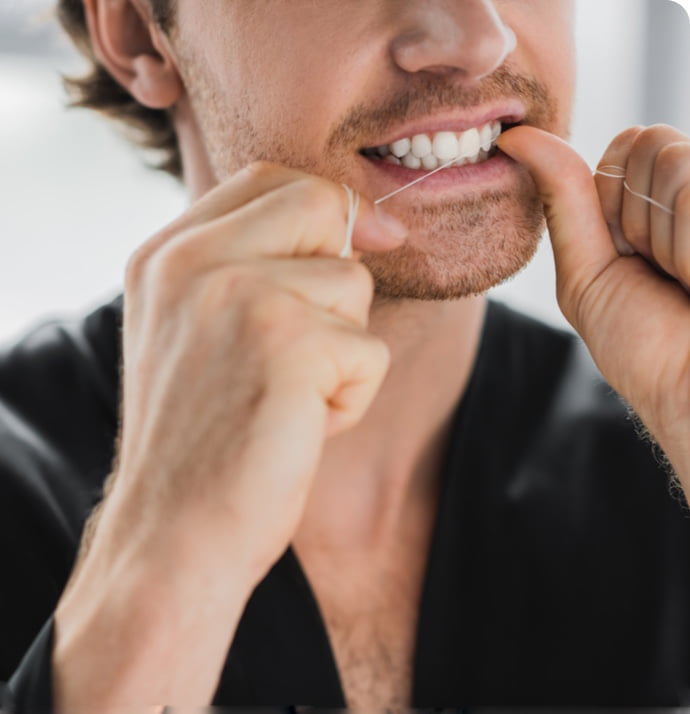
Brushing and flossing regularly is great and will help minimise the amount of calculus that builds up on your teeth, but unfortunately is not enough to prevent it completely.
Will the hygiene treatment whiten my teeth?
No, hygiene treatment will not whiten your teeth. It will remove the yellow/brown calculus that builds up on the teeth as well as stains that develop on the surface, restoring the natural white of your smile. Speak to us about professional tooth whitening or click here to find out more.
Will you tell me if I need other treatment at my hygiene appointment?
During a hygiene appointment, we are focused on targeting the calculus build-up and stains to improve and maintain the health of your gums. A full dental examination involves careful analysis of your soft tissues and each tooth assessment of x-ray images, an in-depth discussion on what we find, your treatment options, and how to improve your dental health. We aren’t able to do all this whilst cleaning your teeth so we recommend booking a dental examination alongside your hygiene appointment, so you aren’t left guessing if there are any other underlying problems.
My partner only comes once a year for a clean, why have I been told to come 2 to 4 times per year?
The rate of calculus build-up differs between all individuals. It can depend on your genetics, i.e., how prone you are to the build-up or to gum disease, how many dental restorations you have and how easy it is to clean around them, as well as your tooth brushing technique. People with particularly crowded teeth or with fixed wire retainers may find it harder to manoeuvre around all the surfaces and require more frequent visits to help remove the tartar. We will assess all these factors and more; determine the best frequency for each individual to maintain gum health.
What other health conditions can I get, if I don’t get my teeth cleaned regularly?
Aside from bleeding gums and bad breath, gum disease is linked to serious health conditions. People who have gum disease have higher rates of cardiovascular problems such as heart attack or stroke. There is an increased risk of bacterial infection from your mouth entering the bloodstream, which can affect the heart valves. Oral health may be particularly important if you have artificial heart valves. Speak to us about all aspects of your medical history, and if you have concerns you may be at higher risk of this.
BACK TO General Dentistry